The Daily Roxette presents ROX40
★ The Reality of Touring North America ★
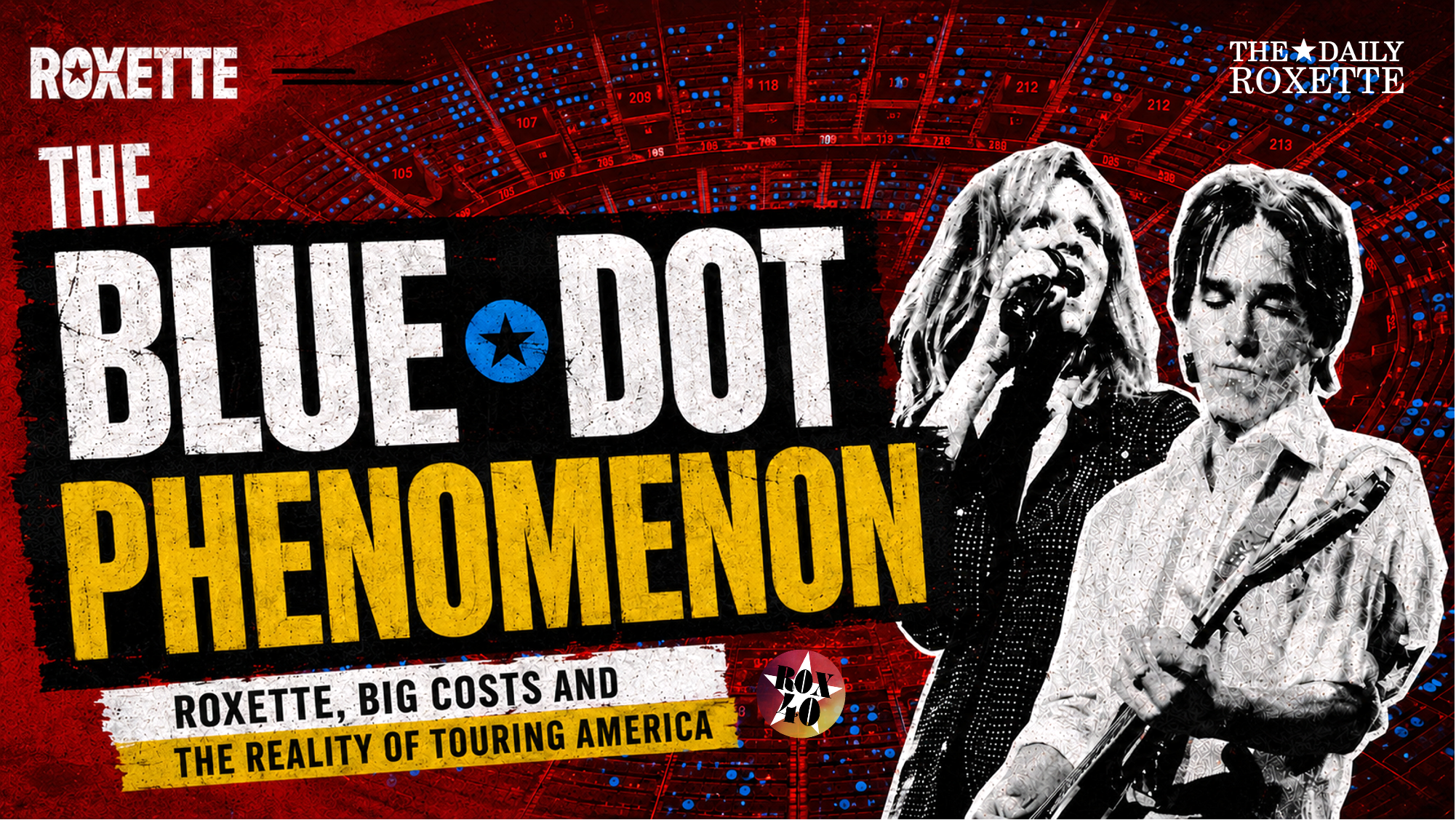
Following the sad news of cancellation and postponement of the planned North American Tour, we explore the ‘Blue Dot Phenomenon’, Big Costs and the Reality of Touring North America. Roxette are far from alone in this crisis.
★ Why America’s Touring Bubble has Burst ★
Following the sad news yesterday, we’ve been asked many questions about the decision to postpone and cancel Roxette’s planned North American Tour. Why has this happened? Were ticket sales involved? Why can a Tour be successful elsehere around the world but become financially impossible in America?
We’ve looked more closely at the current state of the North American Touring Industry, and the answer is much much bigger than Roxette.
Roxette are simply not alone in this crisis.
Team Roxette yesterday confirmed:
“Due to logistics and hugely increased touring costs, Live Nation US has decided to postpone the North American Tour.
Hope to see you some other time down the road.”
Team Roxette, Roxette Official Facebook, 25 July 2026
Per has also shared his own disappointment:
“Lena, I and the band are of course disappointed. We were really looking forward to this North American Tour and US is by far our biggest streaming market. This decision was made by Live Nation USA, which they probably based on their own calculations. I hope we can play for our fab fans in the USA and Canada at some point in the near future.”
Per Gessle, Roxette Official Facebook, 25 July 2026
That distinction is important.
This was a decision made by the American Promoter after reviewing the costs, logistics and financial risk involved. It was not Per, Lena or the Roxette Band suddenly deciding that they no longer wanted to visit North America…
★ What is the ‘Blue Dot Phenomenon’ ★
The phrase “blue dot fever” has become increasingly common within the American Live/Touring music industry.
It refers to the blue dots used to show unsold seats on digital venue maps. When large areas remain blue after tickets have been on sale, artists, management teams and promoters can see very quickly whether a Tour is selling at the level required. The phrase may sound ridiculous, but the financial problem behind it is very real.
In recent months, The Pussycat Dolls cancelled most of their North American reunion dates after taking what they described as an honest look at the viability of the run.
Post Malone and Jelly Roll changed the opening section of their planned stadium Tour. Meghan Trainor cancelled her Tour to focus on her growing family. Zayn cancelled American dates while recovering from illness, while Demi Lovato reduced and changed parts of her schedule after acknowledging that she had overextended what was possible.
Those reasons are of course very different and should be respected. It would be unfair to claim that every cancelled concert is secretly caused by poor ticket sales. However, the sheer number of changed, reduced and cancelled Tours has created a much wider conversation about whether too many expensive concerts are chasing an audience that can no longer afford them.
★ Affordability is not ‘Fake News‘ ★
This cannot be separated from the current political and economic climate in America.
On 17 June 2026, President Donald Trump described affordability as “a fake word made up by the Democrats”.
He dismissed the issue again during a rally in Georgia on 22 July, suggesting that the term had been created by political opponents to criticise his presidency.
This is not about turning a Roxette article into a party political argument. However, touring does not exist outside the wider economy. It depends on ordinary people having enough disposable income to buy tickets, travel to venues, pay for parking, book hotels and perhaps buy food or merchandise while they are there. Affordability cannot simply be dismissed because the reality is inconvenient.
Gallup reported in April that 55% of Americans said recent price increases had caused hardship in maintaining their standard of living. The same proportion said their personal financial situation was getting worse.
Official figures from the United States Bureau of Labor Statistics showed that consumer prices were 3.5% higher in June than one year earlier. Energy costs had increased by 15.7%, while gasoline was a whopping 26.7% more expensive.
These figures affect both sides of the concert barrier.
Fans have less money available for entertainment. At the same time, promoters are paying more to move staging, equipment, musicians and crew members across an enormous country. The political denial therefore matters.
When a President tells people that affordability is essentially an invented problem, it creates a huge disconnect between the message coming from the top and the reality facing families every time they pay their rent, fill their car or buy groceries.
Concerts are normally paid for using whatever money remains after those essentials.
For many Americans, there is now considerably less remaining.
★ The Post Covid Pandemic Concert Boom has Burst ★
The Covid Pandemic also changed the Touring Industry dramatically. Concerts disappeared almost overnight, Tours were cancelled and fans went for a long period without live music.
When venues reopened, demand surged. People wanted to make up for lost time, see their favourite artists and enjoy experiences they had been denied during lockdown. That created an extraordinary period for the Touring Industry, with fans spending heavily and promoters responding by announcing more Tours, larger venues and increasingly ambitious productions.
That initial rush has now essentially ‘burst’.
Industry figures still show very strong demand for the biggest artists, but growth has begun to stabilise following the rapid post pandemic rebound.
Fans are becoming more selective as ticket prices and everyday living costs increase. Many will still spend heavily on one major concert, but can no longer afford every Tour they would like to attend. This has left the American market crowded with expensive shows competing for the same stretched household budgets.
The demand for live music has not disappeared, but the temporary bubble created after lockdown has undoubtedly burst.
★ A Tour is a Travelling BUSINESS ★
There is a persistent myth that an artist announces some concerts, sells tickets and collects the money. The reality is very different.
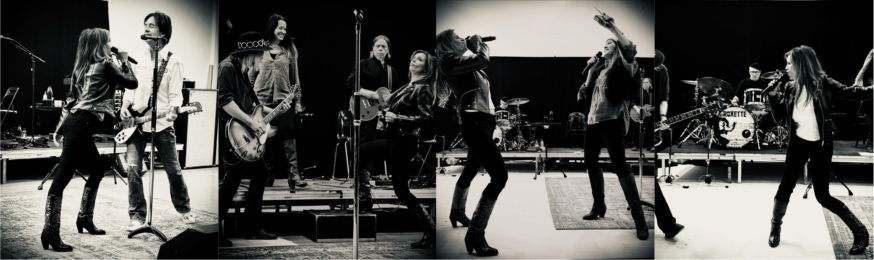
A major Tour is a travelling business involving musicians, technicians, production teams, drivers, caterers, security staff, local workers, booking agents, promoters, venue teams and management.
Before the first song is performed, somebody must pay for:
Venue Rentals
Stage Design/Construction
Sound & Lighting Equipment
Video Screens / Technical Systems
Trucks & Tour Buses
Fuel
Flights & Ground Transport
Hotels
Crew Salaries & Daily Allowances
Local Support Crew (Stagehands / Venue Staff)
Security
Insurance Premiums
Marketing
Wardrobe (Stage Outfits) / Hair / Make-Up
Rehearsal / Soundcheck Time
Equipment Storage & Maintenance
America creates an additional challenge because of its sheer size.
Moving a full concert production between European cities can involve several hours on the road. Moving the same production across America can involve journeys lasting several days, with trucks, buses and crew members covering thousands of miles.
In May, the average ticket price across the leading North American Tours was reported at more than $134. That figure did not include travel, parking, hotels, food or merchandise. Diesel, which is essential for the trucks carrying staging, lighting and sound equipment, had also reached particularly high levels in several states.
A Tour can therefore sell thousands of tickets and still face a substantial financial loss.
The question is not simply whether people are attending. The question now is whether enough people are attending at a price that covers the full cost of bringing the show to their city.
★ “Just use Smaller Venues and reduce Ticket Prices!” ★
Some have suggested that the “wrong venues were selected“, or that “Roxette could have simply moved to smaller venues and charged less“. This is an easy judgement to make, however, it overlooks how a major Tour is actually planned in reality.
Artists do not normally choose venues alone. Promoters and Booking Agents build a route around expected demand, venue availability, location, production requirements and the distances between each concert.
In this case, Per has already confirmed that the decision was made by Live Nation USA, based on their own calculations. Industry guidance also shows that promoters usually propose venues and assess whether the capacity and costs are financially viable.
A smaller venue would not automatically create cheaper tickets either.
Most of the Tour would still need to travel, including the musicians, crew, equipment, hotels, flights, trucks and insurance. Those costs would then be divided between fewer seats, which could actually require a higher ticket price for the concert to break even. Ticketmaster confirms that prices are set by the event organiser after considering production costs, venue capacity and expected demand.
The only way to make a much smaller Tour significantly cheaper would usually be to reduce the production itself, use fewer crew members, carry less equipment or present a different version of the show. That is not a simple venue change. It would mean redesigning the whole Tour, renegotiating contracts and rebuilding a route that may already have been agreed months in advance.
Moving into smaller venues might have reduced the number of blue dots, but it would not solve the financial implications behind them.
★ “Where does the Ticket Cost actually go?” ★
The price paid by a fan is not handed directly to the artist.
There is no universal ticket formula because every Tour, venue and promoter contract is different. Any graphic claiming that every concert ticket is divided using exactly the same percentages is misleading. However, a typical American concert ticket contains several different parts.
For an illustrative ticket costing $150 at checkout, the breakdown might look something like this:
• Around $110 to $120 in Face Value
• Around $15 to $25 in Service Fees
• Around $5 to $15 in Venue / Facility Charges
• Any remaining amount covering Taxes/Tarrifs, Processing or selected Delivery Costs
These figures are an example rather than a fixed industry rule. Some events charge less in fees and others charge considerably more.
Ticketmaster confirms that the Event Organiser sets the original face value after considering Production Costs, Venue Size and expected demand.
The Service Fee may be shared between several parties involved in organising the event. Ticketmaster uses its portion for ticketing technology, payment processing and customer support. Venues may use their portion to pay staff and maintain the building.
A separate facility charge is set by the venue and may help cover staffing, insurance, suppliers and the cost of hosting the event. Local and State Taxes may also then be added depending on where the concert takes place.
★ The Artist does not pocket Face Value ★
Even the face value is not the artist’s profit…
Promoters often agree to pay an artist a guaranteed amount. The promoter then carries much of the immediate financial risk involved in hiring the venue, advertising the concert and delivering the local event.
One commonly used agreement gives the artist a guarantee or a large share of the remaining income after agreed event expenses have been paid. An often quoted example is around 85% for the artist and 15% for the promoter after those costs.
That does not mean the artist receives 85% of everything paid at checkout. It means the artist may receive that share of the remaining eligible income after venue expenses, local production, staffing, marketing and other agreed costs have been deducted.
The artist must then pay their own touring operation from their share, including musicians, crew, management, agents, transport, hotels, rehearsal costs and production. By the time everybody has been paid, the final profit can be considerably smaller than fans might imagine.
If ticket sales fall below the level used to plan the Tour, the promoter may face a choice between continuing with a likely loss or cancelling before even more money is committed.
That appears to be the type of risk calculation Live Nation USA has made in Roxette’s case.
★ Dynamic Ticket Pricing vs Disposable Income ★
Ticket prices have also become even more complicated.
Event organisers can choose different price levels for different areas of a venue. Some also use market based or dynamic pricing, allowing prices to increase when demand is particularly high.
Resale tickets create another layer. These are priced by individual resellers and may appear at figures far above the original face value. The result can be a ticket map containing seats at wildly different prices, even when those seats are located within the same section. These systems are designed to capture the maximum amount that buyers might be willing to spend.
What they cannot do is create money that fans do not have.
An algorithm may decide that a seat is worth $300 or more. That does not mean a household dealing with expensive rent, food, fuel and healthcare can suddenly afford it. When ticket prices increase while household budgets become tighter, fans become much more and more selective. They may still spend heavily on one enormous stadium event, but skip several other concerts that they would previously have attended.
★ The Touring Market has split in two ★
It would be inaccurate to claim that the entire American concert industry has just collapsed.
Live Nation has reported growing overall ticket sales and has said that fewer than one percent of its scheduled shows have been cancelled. The biggest artists continue to sell vast numbers of tickets, particularly when a Tour is presented as a major cultural event that fans believe they cannot miss. But those headline figures do not tell the whole story.
The American market has split.
At the top, a small group of global superstars can command very high prices and still sell enormous venues. Below them, arena, amphitheatre and theatre Tours are operating in a much more difficult space. Production costs are higher, fans are more cautious and streaming popularity does not always translate into enough ticket buyers in every city.
This is where blue dot fever appears…
The blue dots are not the disease. They are the visible symptom of an industry where costs have risen beyond what many audiences can realistically support.
★ Streaming is not the same as selling a Concert Ticket ★
Per’s statement includes one particularly important fact. The United States is Roxette’s biggest streaming market.
That demonstrates the continuing popularity of Roxette’s music, but streaming and touring measure two completely different things.
A fan can listen to Roxette every day as part of a monthly streaming subscription. Attending a concert may require a ticket, service fees, fuel, parking, food, childcare, flights and accommodation. Streaming audiences are also spread across an enormous country. Millions of plays across America do not automatically become thousands of ticket buyers in each individual city.
That is not a failure of the music or the artist. It’s the difference between pressing play at home and committing hundreds of dollars to one evening.
★ This is not a verdict on Roxette’s 2025/2026 Tour ★
The most important point is that this has nothing to do with the format or quality of the Roxette show.
The exact same Tour has already been enormously successful across Europe, Australia, South Africa and South America.
Per, Lena and the Roxette Band have received an overwhelmingly warm response from audiences and critics. Together, they have created a joyful and respectful celebration of Roxette’s music, while continuing to honour Marie Fredriksson’s irreplaceable place at the heart of Roxette. America does not erase that achievement.
The fact that this particular part of the Tour became financially unworkable says far more about the current American Touring Market than it does about Roxette.
The Tour works. The songs work. The performances work. Unfortunately, the American numbers did not.

★ “Speak to Me with Gracefulness”: The Final Word ★
This is extremely sad and disappointing for Per, Lena, the Roxette Band and the entire Touring Team.
It is equally heartbreaking for the fans who bought tickets, made plans, arranged travel and believed they would finally experience Roxette’s music live again. Their disappointment is completely understandable.
However, Roxette are not immune to the same market conditions as other artists. They are unfortunately one of many acts facing an American touring industry caught between hugely increased operating costs and an audience whose ability to pay has been stretched to breaking point. This has nothing to do with the quality or format of the show.
It is an industry wide problem made worse by rising costs, economic uncertainty and a political leadership that continues to dismiss affordability concerns which millions of Americans experience every day.
Thankfully, the Roxette Tour has proved to be a success outside America and continues throughout Europe until the end of August.
The stars did not align for North America this time. We sincerely hope Per, Lena and the Roxette Band will meet their fabulous American and Canadian fans somewhere further down the road.
★ The Joyride continues… ★
The Roxette 2025/2026 Tour has been a massive success, with almost 60 incredible concerts completed throughout Europe, Australia, South Africa and South America. Per, Lena and the Roxette Band are sounding phenomenal, delivering hit after hit.
Together, they have created a truly joyful and heartfelt celebration of Roxette’s music, allowing longtime fans to hear these songs live once again while introducing them to a new generation.
The band is currently crushing the 3rd European leg of the Tour, and you can catch them live at their remaining shows:
July 26 – Neu-Ulm, Germany
July 28 – Bremen, Germany
July 30 – Schwetzingen, Germany
August 1 – Ringsted, Denmark
August 3 – Bonn, Germany
August 15 – Raseborg, Finland
August 28 – Arbon, Switzerland
August 29 – Spiez, Switzerland
Celebrations also continue for Roxette’s 40 Anniversary, with even more releases and surprises planned. #ROX40 #Roxette40

★ Article Sources ★
Ticketmaster USA, accessed 26 July 2026.
North American Tour Statement, Roxette Official Facebook, 25 July 2026.
Roxette Cancel North American Tour, Exclaim!, 25 July 2026.
How are ticket prices and fees determined?, Ticketmaster USA Help, accessed 26 July 2026.
Blue dot fever spreads as major concert Tours get cancelled. What does it mean?, San Francisco Chronicle, 7 May 2026.
Musicians are cancelling their Tours. Is blue dot fever to blame?, Northeastern Global News, 18 May 2026.
Nine major artists have cancelled or postponed 2026 Tour dates, Entertainment Weekly, May 2026.
Affordability still dominates Americans’ financial worries, Gallup, 28 April 2026.
Consumer Price Index for June 2026, United States Bureau of Labor Statistics, 14 July 2026.
Donald Trump Press Conference at the G7 Summit, Roll Call Factbase, 17 June 2026.
Trump scoffs at affordability as he promotes economic policies at Georgia rally, The Guardian UK, 22 July 2026.
Roxette cancels 14 North American shows, Per Gessle says he is disappointed, Sweden Herald, 25 July 2026
___________________________________________________________
Big Thanx to:
PER GESSLE ★ LENA PHILIPSSON ★ THE ROXETTE BAND ★ WARNER MUSIC SWEDEN
Research + Article by:
Thomas Lawrie-Clark ★ Thomas Evensson ★ Kai-Uwe Heinze
Photography by:
Thomas Evensson ★ Kai-Uwe Heinze ★ Thomas Lawrie-Clark
All other photographs via Roxette / Lena Philipsson Official Facebook
Copyright remains with original owners.
‘Blue Dot Roxette’ Header Image by:
Thomas Lawrie-Clark

|
|

|
July 26th, 2026
This article was posted here on TDR in these categories:
TDR:Editorial, TDR:Exclusive, TDR:Live, TDR:Roxette.
[tdr 1064593]